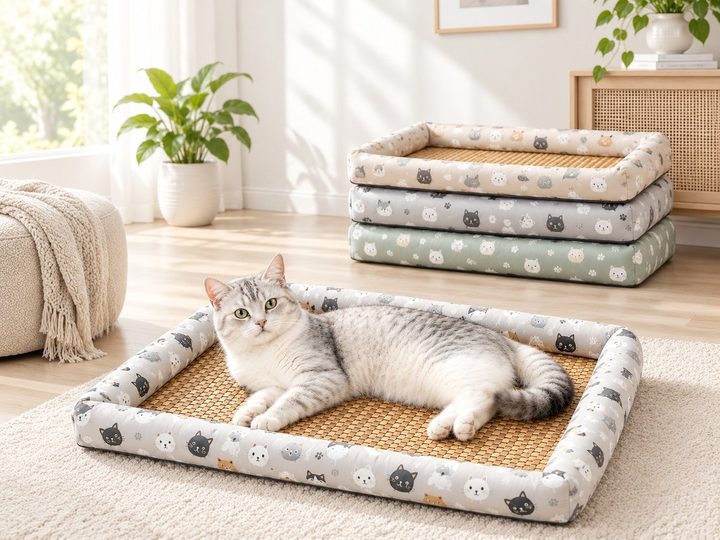
In Thailand, the Philippines, and much of South and Southeast Asia, cat beds fail in the market for a reason that has little to do with design: moisture. A bed that feels plush in a showroom can turn damp, musty, or lumpy after a few weeks in a humid apartment. For importers, that shows up later as returns, complaints, and slow-moving stock.
Start with the shell and the filling
- Ask for breathable outer fabrics rather than dense, coated ones that trap heat.
- Confirm the filling type and how it behaves after washing — clumping fillings are the most common complaint.
- Prefer removable, machine-washable covers so end customers can dry them quickly.
- Check whether the bed keeps its shape after two or three wash cycles, not just on arrival.
What to test on the sample
- Sit the sample in a warm, humid room for a few days and smell it — odour tells you more than any spec sheet.
- Wash and dry one full cycle, then compare it against an untouched sample side by side.
- Pull the seams and the zipper under load; stitching is usually the first thing to fail in humid storage.
Packing for humid transit
Container interiors heat up in transit, and cartons absorb moisture. Poly-bag each unit, keep a moisture barrier inside the master carton, and specify carton board strength for stacking rather than for looks. Document what you agree on — packing details are the easiest thing to lose between the sample and the bulk order.
If you are building a cat-bed range for a humid market, tell us the climate, the price band, and the sizes you need. We will come back with material options and a sample plan that matches.